
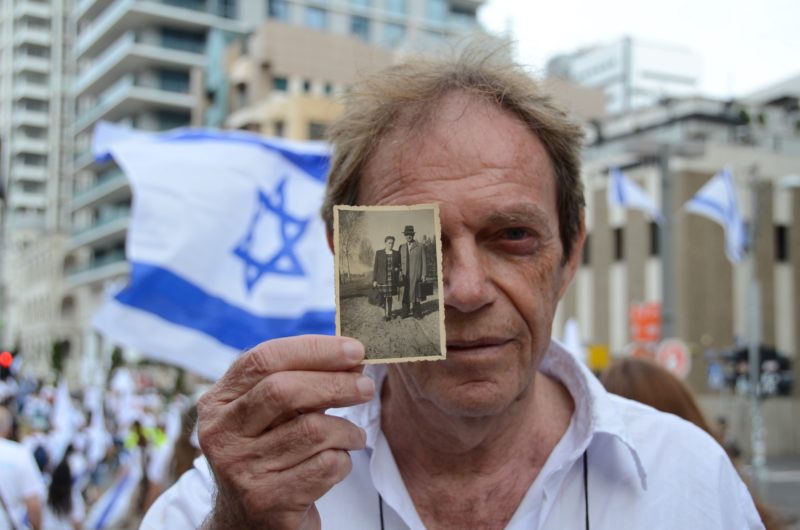
“Tomorrow I will march for you, mom and dad. I will march in the central boulevard of Tel Aviv. Unlike you, dad, marching in Warsaw sewers, away from the starving, rebelling ghetto. How could a human being survive in the sewers for a whole week? Would any of us, today, survive even one day in there? But the Germans started setting fire to the ghetto buildings, one by one, aiming to wipe them all off the face of the earth, not leaving even one Jew alive in this world. And you and your friends wanted to live. Tomorrow I will march in Tel Aviv. Unlike my mother, a young girl of twenty years old, marching between hostile villages around Warsaw. Sleeping in the fields, come summer or winter, digging holes for the night in snow or frozen ground. And at daytime – looking for a job. As a seamstress, or ...
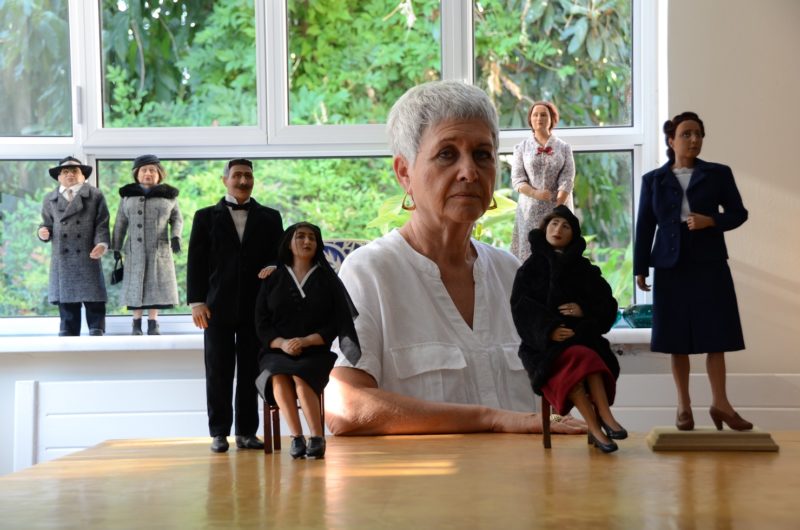
“We never talked much about what had happened to my extended family during the holocaust. It was a kind of taboo. I grew up without grandparents, and had no uncles or aunts. It left a great void in my life. I could only relate to my lost family through photos my parents had somehow managed to keep throughout the holocaust. As a child, I remember I loved looking at those pictures – it made me feel as if they were still part of us. Dolls were my favorites when I was a child, and I loved creating paper images and clothing items. Fifty years later, and thanks to this love, I am a puppeteer who happily produces all kinds of puppets. The joy of creation and the fact that my husband had launched, at about the same time, a research of his own family history, made me think I should ...
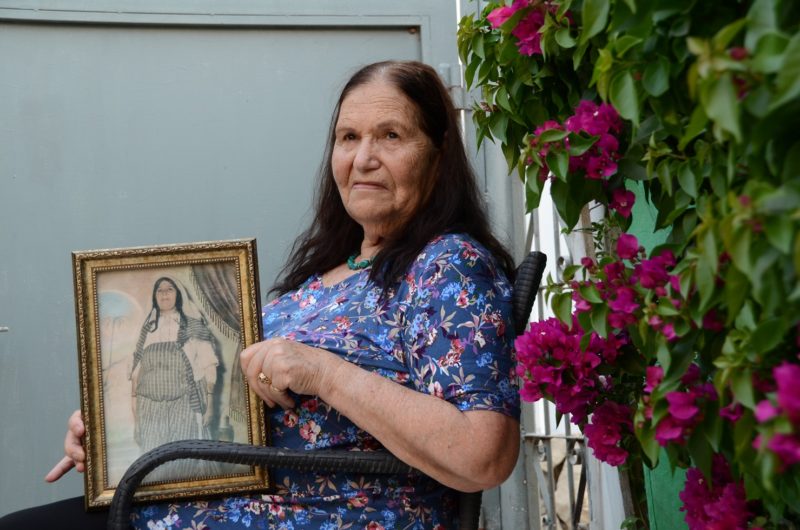
“I was born in 1939, in the Tunisian city of Gabes. Africa doesn’t usually come to mind with regard to the holocaust, but the Nazis reached us too. There was a guy in our neighborhood – Messiah, they called him – considered a bit off his head, and he begged people to escape the country before the Nazis completely took over. He talked about extermination camps, gas chambers and the incessant crematoriums in Europe. He claimed the Nazis were systematically eradicating the European Jewry, and whoever stayed in Tunisia was doomed to the same fate. Since he was a little nuts, nobody wanted to believe him. His stories sounded so insane that no-one would take them seriously. But the moment the Nazis rose to full power people understood it was not Messiah that was crazy but the Nazis themselves – they, who wanted to exterminate each and every Jewish person ...
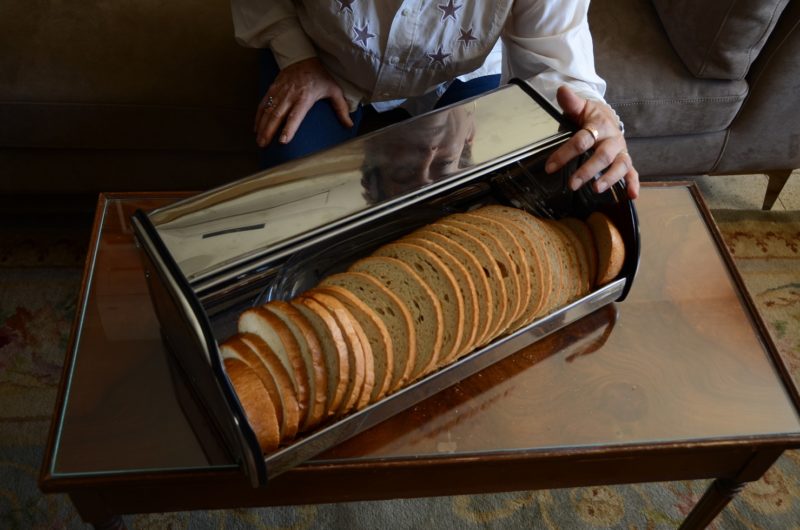
“I grew up in Netanya of the early 60’s, the only child of two Holocaust survivors who realized their dream and came to Israel. But in many ways, it felt like I was in Lithuania, back in the 30’s. Being a holocaust survivor was considered shameful when I was a child. No one spoke of what had happened “there”. Memories were repressed – everyone had their own troubles, nobody wanted to listen. The atmosphere at home had always been a sad one. There were no reasons to be happy, not even on birthdays. The house filled with guests on holidays, but the absence could not be compensated for. I never said the words grandma, grandpa, aunt, uncle – there were no such persons in my life. I only began to understand the true meaning of family, of the warmth and safety of a family, when I got married and my ...
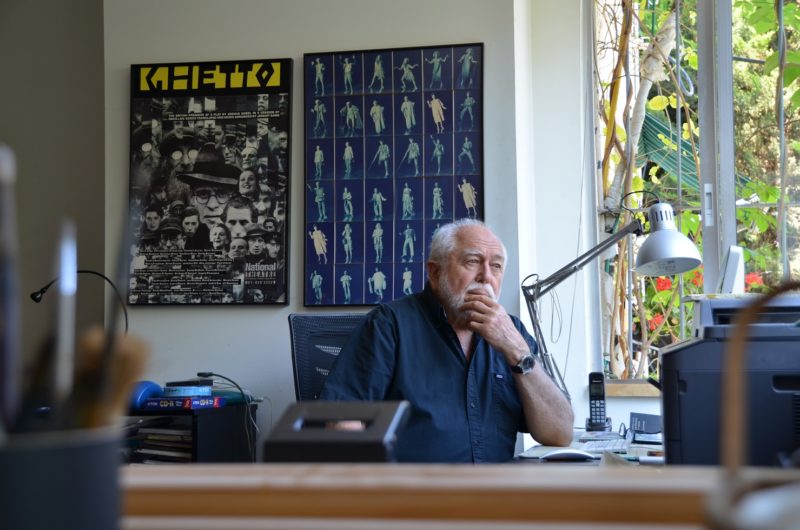
“The play “Ghetto” was written following a suggestion made by a good friend of mine – that I would write a script for a TV program about the activities of underground youth movements in the ghettos during the Holocaust. While I was doing my preliminary research, I found out there was a theater in Vilnius Ghetto where plays were staged by actors who lived in the ghetto. It was a fascinating discovery for me. I interviewed a Vilnius Ghetto survivor about the significance of this theater, and she told me that after a grueling day of work in the ghetto, the theater offered them the chance to wear their best clothes and go to watch a play. This was their way of clinging to sanity when the whole world around them was falling apart. Writing the play, I was especially interested in the significance of theater as an art in ...
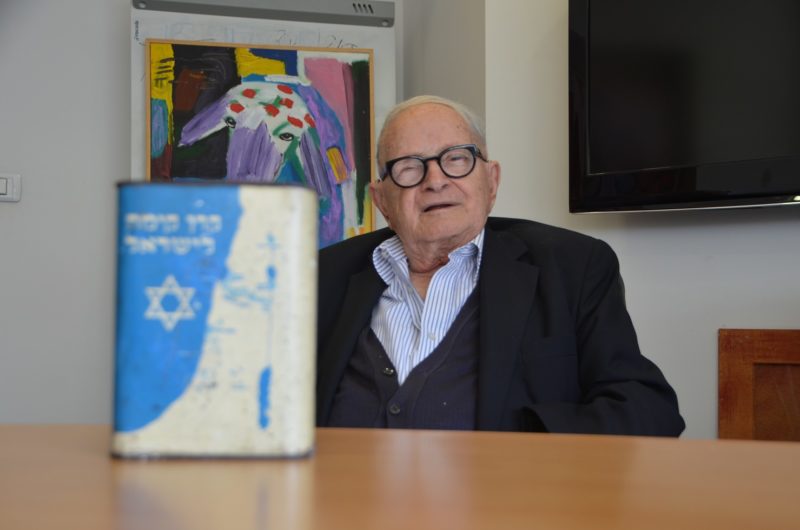
Rafi Eitan, The man who brought Adolf Eichmann to Justice. In the early 60’s we got a tip from the Argentina Attorney General that there is a possibility that Eichmann is living in the Buenos Aires area. A blind German guy name Herman gave us the first clue on his location. Apparently, his daughter started dating a young German boy named Nicolas in school. Herman had suspicions about the boy’s family background and found out that he was actually the son of Eichmann. Herman’s tip was a thread. We knew that Eichmann had a family in Argentina and that he was probably living there but we didn’t have an address. We sent a crew to Buenos Aires and we managed to find the exact address: Garibaldi Street in the San Fernando neighborhood in Buenos Aires. On the night of 11 May 1960, at 20:05 a bus pulled up and a ...
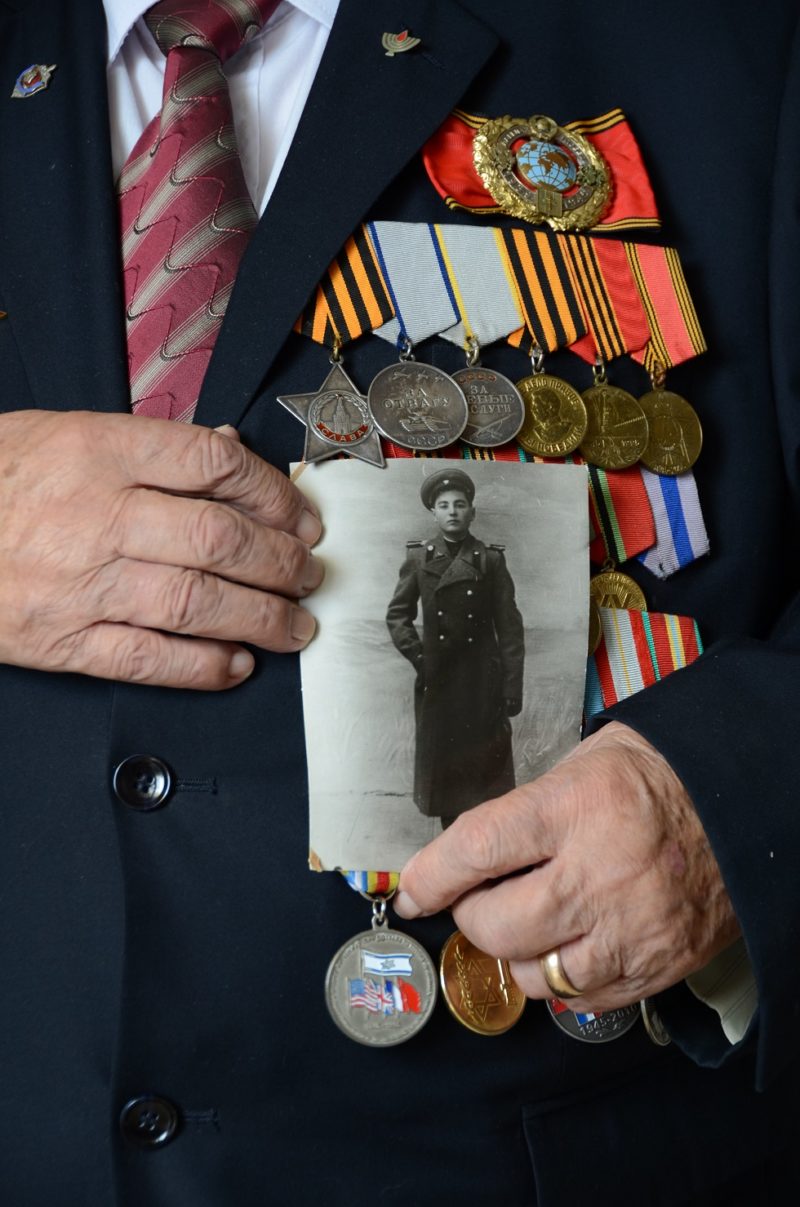
Avraham Michael Greenzide, Chairman of the Second World War Veterans Association I was seventeen and a half when I got an induction order to the Red Army, and by September 1943 I was drafted and sent to basic training. As new recruits, we all became familiar with warfare and weapons, but no boot camp could prepare us for the smell of burnt flesh. I was enlisted to the Tartus division which fought the Nazis in Estonia, Norway and Poland. In the harsh battle of Katowice, Poland, held on January 12th, 1944, I felt for the first time what it meant to be hurled into hell. It was very simple: you either killed or got killed. Whoever claims he knows no fear in battle is a liar, or someone who hasn’t the slightest idea. I was never a coward, I charged forward whenever I had to, but fear never left my ...

“The Jewish community of Thessaloniki was at its peak 80,000 strong. 97 percent of the city’s Jews were sent to Auschwitz. Luckily, my father had a Spanish citizenship which prevented our deportation to Auschwitz and we were sent to the Ghetto instead, until our status was clear. Fortunately, a new Spanish consul arrived at Greece at the time, and Sebastian Romero Radigales – that was his name – did everything in his power to save the Jewish Spanish subjects. The Nazis urged the Spanish government to accept us, but it refused to do so. We were therefore transferred to Bergen Belsen concentration camp, in Germany, until our fate was decided. Radigales fought for our cause, and the Spanish government finally consented to let Jews with Spanish citizenship pass through its territory, but only as a waypoint to another destination. Radigales managed to save 510 Thessalonikian Jews, and was awarded with ...
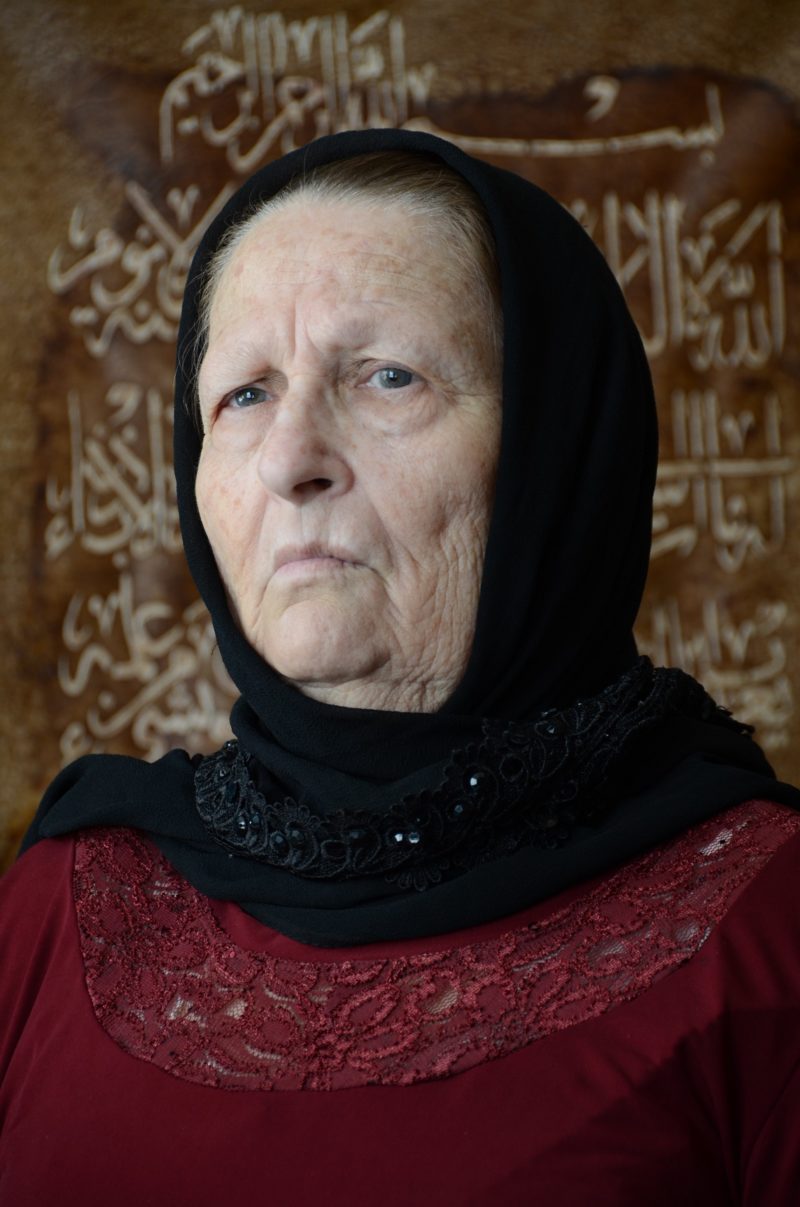
Leila Jabarin Sometimes I think my story sounds so insane that I am afraid to tell it – lest people would not believe me. I was born in Hungary, in a concentration camp, by the name of Yelka Bershatzki, and was forced to spend my early childhood in a dark underground shelter. The very fact I can speak with you today is no less than a miracle – I was not supposed to survive more than a few days in those horrible conditions. Luckily, the night I was born one of the German doctors my mother had had to work for turned out to be our guardian angel. He hid us – my father, mother, brother, two sisters and me – in a damp basement for more than two years, until the camp was liberated by Soviet and British forces. We went back to Yugoslavia, and in 1948 my parents ...
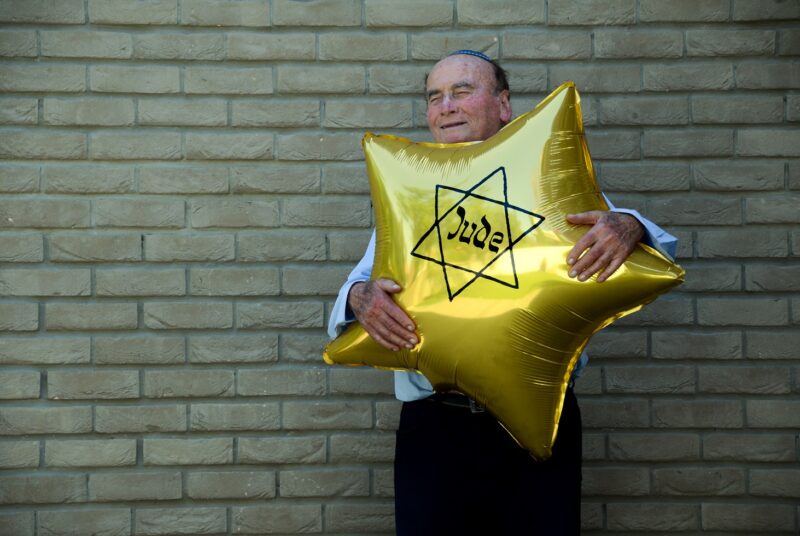
Auschwitz Holocaust survivor “Even in the darkest place on earth, you can find a sense of Humor. When people think about the Holocaust, they rightfully think about the atrocities that the Jewish people suffered. The Nazis did everything they could in order to break down our human spirit, so the only thing I could do to maintain my Humanity was to try to use my sense of humor and to make myself and the people around me happy. Just for example: In the cattle car, on our way to Auschwitz, the cart was so packed where you couldn’t even move. I demanded from the person who was almost glued to me to see his valid train ticket… in response, that person was about to hit me, but, luckily, my dad who was still with me at that time managed to stop that. Or, In that death camp itself when I saw one of the Kapos limping, ...