

Holocaust Survivor Rexingen, Germany I was born in April 1933 in the town of Rexingen, Germany – the very year Hitler rose to power and the Weimar Republic became Nazi Germany. I don’t remember much from my early childhood, but I clearly remember the moment everything changed for me and my family – Kristallnacht, the Night of Broken Glass. During that horrific pogrom, which spread terror among Jews in Germany and Austria, 91 Jews were murdered, over 1,400 synagogues were burned and destroyed, and about 30,000 Jews were arrested and sent to concentration camps. I remember the SS soldiers marching through our town, searching houses, and the fear that gripped everyone. My mother took me to fetch my sister Inge from school, holding us tightly, terrified that someone might hurt us. They searched our home, looking for Jewish men. Fortunately, my father managed to hide in a barn – and ...

Holocaust Survivor (In the photo, Irene is seen with her mother Chaya, her aunt Fela Turner, and her cousin Max during one of their family vacations on the beach in Belgium.) “I was born in Brussels in 1935, an only child. I remember a wonderful, happy childhood. We were a close and joyful family who loved going on picnics and family holidays. Everything changed completely with the German invasion of Belgium. At first, we fled to Paris, then to Toulouse, but after some time my parents decided to return to Brussels. When we came back, we were already required to wear the yellow badge. I hated wearing it – it was so humiliating to be marked in that way. Because of the growing danger to Jews, my parents decided to send me to live with a Christian family. My piano teacher, who was Jewish, knew a Christian couple named Florent ...

Holocaust Survivor, France “I was born in France in 1939, just before the official outbreak of World War II. When I was two and a half, I fell ill with diphtheria and had to be hospitalized in isolation for three months. Because of the war, my family was constantly on the move, and food was always rationed. They decided that the best chance for me to recover properly was to send me to a farm in the French countryside, where I could breathe fresh air, eat healthy food, and regain my strength. The arrangement they found was with the R family who were paid to host me, but they didn’t really care about me. What mattered to them was the money. I struggled to fit in on the farm. I was lonely and cried all the time. I didn’t realize it then, but as an adult, I understand why people ...
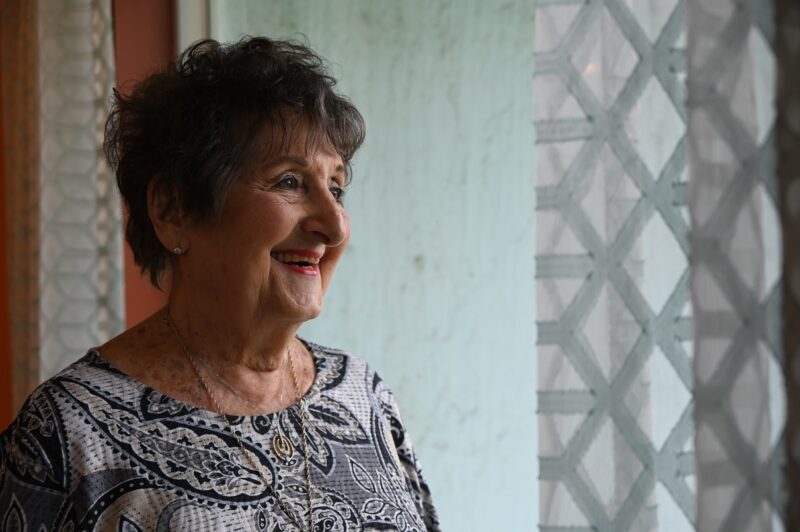

Holocaust Survivor (In the picture Manfred is holding, you can see him when he was five years old.) “I was born in 1928 in the city of Cologne, Germany, a few years before Hitler rose to power. I remember that when I was only five years old, I sat by the window watching a parade of the Hitler Youth – the ‘Hitlerjugend’. I didn’t really understand what this movement stood for, and I told my parents that when I grew up, I wanted to join them. My parents were shocked and told me that I couldn’t – because I was Jewish. I was upset and asked, ‘Why does it matter? I’m German, just like them! Why can’t I join?’ They explained that we were Jews and that the German government didn’t like us. That was the first time I realized there was something negative attached to being Jewish, and the ...

Holocaust Survivor I remember everything. Although I was born in France, my family’s story began long before that, in Poland. Both my mother’s and father’s families came from the city of Łódź, and in 1926, they moved to Berlin in search of better opportunities and safety. As the shadow of anti-Semitism spread across Germany, my father made the difficult decision to leave Berlin. In 1935, he moved to France and joined the French army, hoping to build a better future. Two years later, in 1937, my mother joined him in Paris, and they were married. I was born there the following year, in 1938, in a modest building where our family was the only Jewish one. My father, David Adler, served in the French army for a time but was later dismissed solely because he was Jewish. After the German invasion of France, he volunteered to work as a lumberjack ...
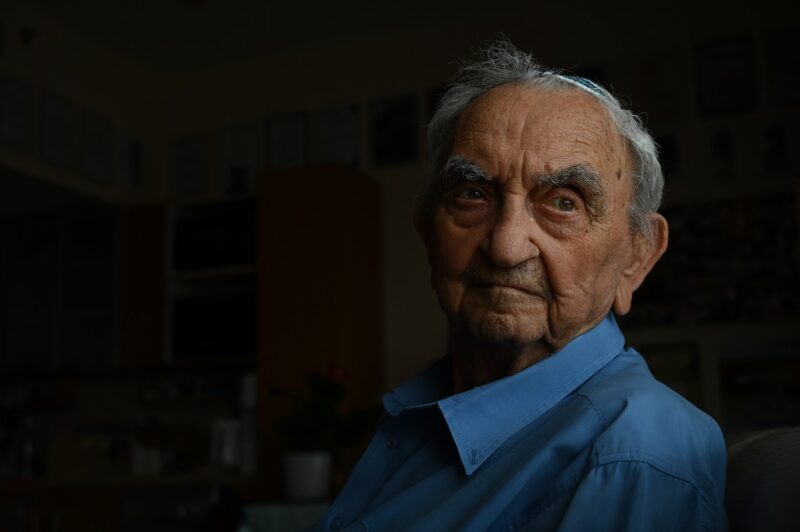
Holocaust survivor, Auschwitz-Birkenau “I was born in 1931 in the town of Velká Sevljuš, Czechoslovakia, into a Hasidic family where religion was a central and inseparable part of our daily life. My father, Menachem Mendel, and my mother, Bela, were devoted parents to seven children: Leibush, Sima Rachel, Braindel, Avigdor, Moshe Yosef, Tzipora, and Chaya Sarah. From this large and beloved family, only two of us – my eldest sister Sima Rachel and I – survived the horrors of the Holocaust. Until 1939, our life in Czechoslovakia was happy and peaceful, almost carefree. Everything changed suddenly with the Hungarian invasion, which brought increasing discrimination against Jews. The Hungarians adopted Nazi anti-Semitic laws, leading to severe restrictions: Jews were forbidden from opening private businesses, barred from entering universities, and overall, the atmosphere on the streets became threatening. Fear became a part of everyday life. We didn’t dare walk freely in the streets, ...

Ganei Tikva, Israel Giving birth in the safe room “At 5:30 in the morning, we received the first alert about missile launches from Iran and immediately went into the safe room. Dana told me she was feeling a bit of wetness and pain, and I thought to myself – it’s okay, the siren will end, and we’ll head to the hospital. I sent a WhatsApp message to my mom and asked her to come as soon as the sirens ended – so she could watch our other two kids while we went to the hospital. But as the minutes passed, the pain became more intense – and I moved Dana from the safe room to our bedroom. This was already our third birth, so I understood pretty quickly where this was headed… and then Dana suddenly said: “I can feel the head.” At that moment, I realized we were in ...

Director of the emergency department at Soroka Medical Center and deputy director of the hospital. “The moment I heard the sirens, I immediately got into the car and drove to the emergency room. It never occurred to me that a ballistic missile had struck our hospital directly. Just minutes after I arrived, we were already treating casualties injured by the blast, alongside many people suffering from anxiety who flooded into the ER. The missile struck a building where, just a day earlier, many patients had been hospitalized – patients we had relocated to protected areas but the missile caused severe damage to entire departments – departments intended to save lives. At Soroka Medical Center, we don’t rely on luck – we rely on preparedness. That’s why the building that was hit had been evacuated the day before, as part of a pre-planned strategy that we implemented and adapted according to ...
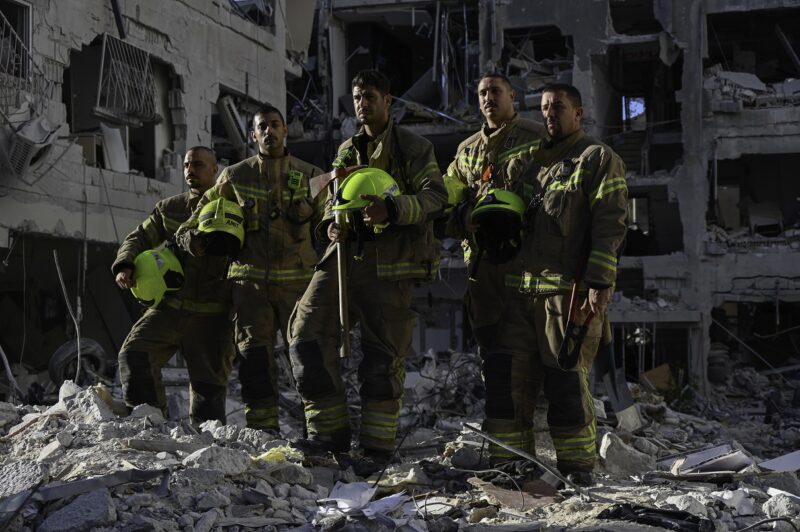
Firefighters from Holon Fire Station (From right to left) Sergeant Major – Kfir Hazan Firefighter – Barak Bar Shalom Sergeant Major – Shlomi Hakmon Firefighter – Dor Amit Sergeant Major- Tal Fahima “On the day the Iranian missile struck Bat Yam, we heard the siren and immediately rushed to the shelter located in our station. The missile landed about three kilometers from us, and the explosion was massive. We instantly knew there was a scene we had to reach urgently. Within seconds, we received a report of the strike’s impact. We grabbed our gear, got on the fire truck, and immediately set out. We didn’t know exactly what to expect. The initial report mentioned a missile hitting a residential neighborhood and a high-rise building that had sustained severe damage, but none of us imagined the scale of the destruction. Only when we arrived did we truly understand how severe the situation ...